Peter K.
Alone against the state
A film by Laurent Wyss




Feature film, CinemaScope, 75 min, release 2020
Written and directed:: Laurent Wyss
Cast:
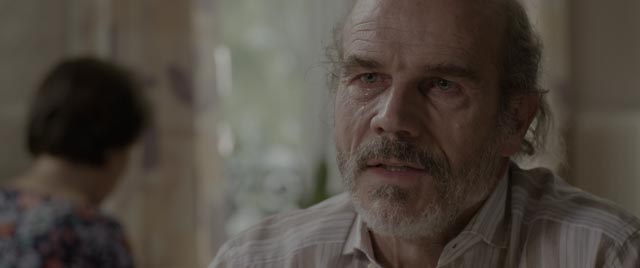
Peter K: Manfred Liechti
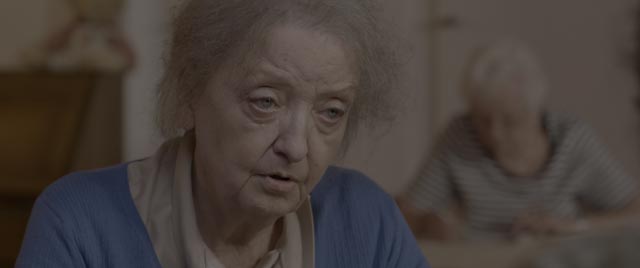
Tante Susi: Sibylle Brunner
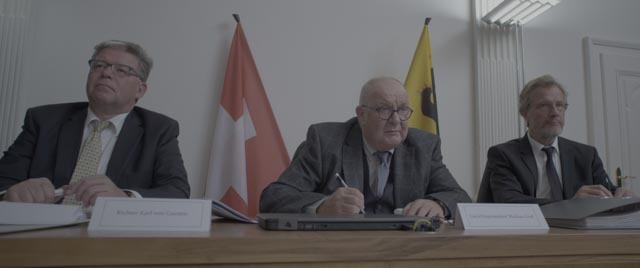
Richter Markus Graf: Hanspeter Bader
Prof. Dr. A. Ernst: Stefanie Günther Pizarro
Kriminalpolizist Gruber: Thomas Loosli
camera: Daniel Leippert
Focus Puller: Jean Christophe Dupasquier, Mirco Rihs
Sound: Olivier JeanRichard / Patrick Fluri
Light: Hanspeter Wieland Silas Thommen, Eric Walther, Pierre Reischer
Directorsassistent: Sandra Reichenwallner
Production manager: Julia Leu
Costume Design: Manon Kündig, Heidi Gruber
Wardrobe: Heidi Gruber
Mask: Ernst Lüthi
Location Manager: Julien Grindat
DIT: Patrick Fluri
Special Effects: Micha Hurni
Music: sonderfilmmusic Sandra Stadler, Bänz Isler
Edit: Micha Hurni
Grading: RecTv
Soundmix: Peter von Siebenthal
Coproducer: Badlandfilms Bienne, Julien Grindat, Patrick Fluri
Producer: Pedro Haldemann
Distributor: Aardvark Filmemporium Mark Pasquesi
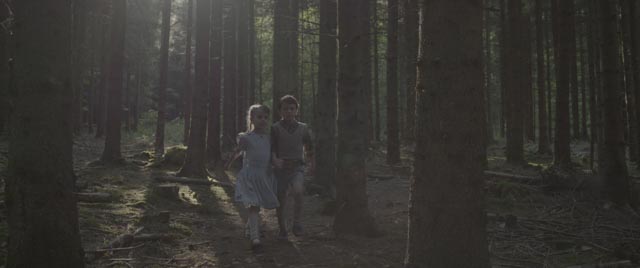
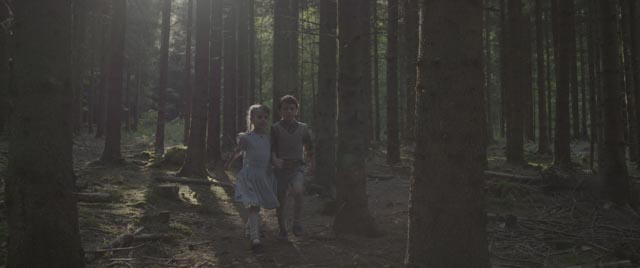
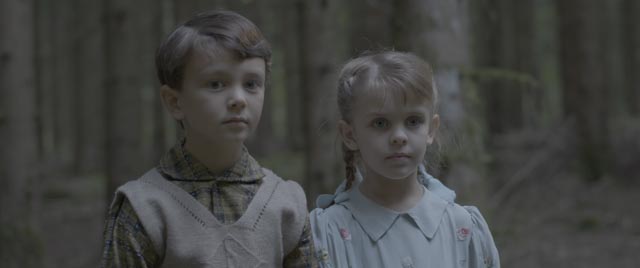
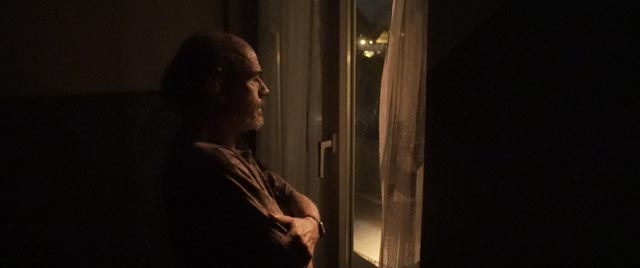
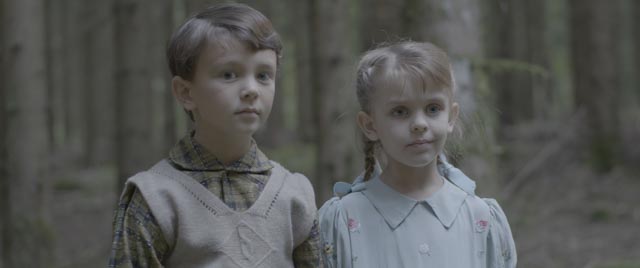
After his mother’s death, Peter Kneubühl faces eviction from the house where he cared for her. He fights to defend his home against his sister, the city administration, and ultimately the armed police. His conspiracy theories and writings develop into a violent reality, turning him into a renegade celebrity. His growing fear and loneliness bring back nightmares from childhood, while the court case reveals a dark family past. Peter K.’s struggles with the state force him to face his most terrifying and unpredictable opponent: himself.
STATEMENT BY THE DIRECTOR
While Peter Hans Kneubühl was still on the run in September 2010, I wanted to know who this man was who went to such lengths to defend his home. I began researching this story in great detail—the press coverage, public reactions, court records, and his writings. In the course of my research, it became clear to me that the psyche of this supposedly “mentally ill” man would be at the center of my story. When I interviewed him, I found Peter Hans Kneubühl to be the loneliest man I had ever met, scarred by his youth. But he was also intelligent and astute, frustrated by the inheritance dispute and the loss of the house where he had cared for his mother. The lack of social and legal support seemed outrageous given Peter K.’s obvious powerlessness. His fear-filled descriptions became reality due to the inflexibility and lack of compassion of our system.
I used his writings, press reports, and court transcripts to develop the film’s subjective narrative style, which allows us to empathize with Peters’ narrow perspective and experience how his world collapses.
During my research, I discovered that inheritance cases and family disputes regularly spiral out of control. In Peter K.’s case, his inability to communicate with his sister or hire a lawyer led to his frustrated, violent preparations and actions. These suspicious actions aroused the suspicion of local authorities, who subsequently opted for aggressive rather than supportive or conciliatory measures. The cycle escalated, confirming Peter’s belief in a repressive surveillance state and the government’s belief in Peter’s pathological antisocial mental illness. These rigid positions prevented any communication and disregarded Peter’s years of compassionate care for his mother and the potential assistance services offered by the city. The goal of serving the public and private good was forgotten by both parties, and the most primitive interpretation of public order prevailed. The modern tragedy of an isolated man in an isolating country.
Press-Map
“Grandios gespielt von A bis Z” / “Une interprétation grandiose” SRF Kultur
“Really good and really disturbing.” BKA
“Wyss has woven an atmospheric web that holds.” Bieler Tagblatt
“Dark characters are the most exciting to play” Liechti in the SRF regional journal
“Une chasse à l’homme haletante” TV découverte
“Le délire de Peter K. est un miroir au délire sécuritaire et aussi administratif du système.” “L’acteur qui incarne Peter K. est fabuleux.” Les Beaux Parleurs RTS
“On ne prend ni partie, ni on juge Peter K. Dans ce film, c’est un exercice d’équilibrisme très fort.” Médialogue, RTS
“Peter K., un protagoniste absolument fait pour le cinéma. Le Quotidien Jurassien, 01.02.2023
Schweiz: Solothurner Filmtage 2023 / BeMovie Film Festival 2023 (Berner Filmpreis, bester Film) / Schweizer Filmpreis 2023 (Manfred Liechti, bester Schauspieler) / Delémont-Hollywood (Prix Opale)
Deutschland: Munich Film Awards 2023 (Best soundtrack for Sandra Stadler & Bänz Isler) / Internationale Hofer Filmtage 2023
USA: New York International Film Award 2023 (Best Soundtrack for Sandra Stadler & Bänz Isler)
Japan: Tokyo Cinema Awards 2023 (Best narrative feature)
“Der Schauspieler Manfred Liechti liefert als “Amok-Rentner” eine hervorragende Leistung. Kneubühl erscheint in Wyss’ Werk alles andere als durchtrieben. Von nagender Angst und tiefem Misstrauen gegenüber den Behörden getrieben, ist er zu allem bereit.” Tessiner Zeitung 24.2.2023
FCH
“Quand je suis tombé sur ses journaux intimes, un nouveau monde s’est ouvert à moi. J’ai eu envie de plonger le spectateur dans le cerveau du criminel le plus connu de Suisse.” Entretien avec Laurent Wyss, GRRIF 6.2.2023
“Un homme en totale perte de vitesse avec son époque “ Daily Movies 8.2.2023
“Habité par son personnage, Manfred Liechti nous fait ressentir les émotions, les contradictions et les obsessions de cet homme anarchiste et méfiant qui défie l’autorité.” La Liberté 7.2.2023
“Laurent Wyss livre un décryptage pertinent”, Le Courrier 9.2.2023
“Les événements qui ont conduit à l’extraordinaire chasse à l’homme à Bienne de 2010, du point de vue du pourchassé”, j:mag 9.2.2023
La Cafète sur Radio FR 6.2.2023
“J’ai trouvé le film assez fascinant. Il y a une vraie volonté d’efficacité. On est dans une forme de thriller paranoïaque qui peut être assez puissant. J’aime bien aussi le début parce qu’on suit de l’intérieur la paranoïa de cet homme qu’on voit obsédé à l’idée d’un état policier dès qu’il voit une caméra de surveillance, et il a l’impression qu’on lui veut du mal. Cette intériorité me fascine” souligne pour sa part Rafael Wolf, spécialiste cinéma de la RTS. RTS, divers, 2023
“Peter K, seul contre lʹEtat”, film coup de poing sur le forcené de Bienne, Médialogues 7.2.2023
RTS Le Grand Soir, 6.2.2023
L’invité – Laurent Wyss, réalisateur, Les Beaux Parleurs, La 1ère 29.01.23
“Est-ce qu’on est pas dans un système paranoïaque, en plaçant des caméra partout?” “Une personne qui a visiblement des troubles psychologiques et la machine tourne et avance avec une brutalité énorme.” “Le délire de Peter K. est un miroir au délire sécuritaire et aussi administratif du système.” (Gabriel Bender, sociologue) “L’acteur que vous avez choisi pour incarner Peter K. est fabuleux.” “On arrive totalement à comprendre la folie et l’intelligence de ce personnage” Marie Fourquet, scénariste
Médialogue, 30.1.23
“on ne prend ni partie, ni on juge Peter K. Dans ce film, c’est un exercice d’équilibrisme très fort.” “On sent que c’est un homme qui avait ses obsessions, mais c’est un être humain.”
Un film sur Peter K. débarque dans les salles romandes, RTN 29.1.23
«Peter K., c’est un nom romand!», Le matin 29.1.23
Le public francophone répondra-t-il présent? «C’est mon espoir, avec l’histoire universelle d’un citoyen lambda qui défend ses libertés contre la bureaucratie», répond le réalisateur. «La vente forcée d’une maison héritée, c’est assez fréquent…»
“Peter K., un protagoniste absolument fait pour le cinéma.”, Le Quotidien Jurassien, 01.02.2023
“Une chasse à l’homme haltetante”, TV découverte, nov 2022
L’invité du 12h30, RTS (15.09.2022)
Le forcené Peter K. passe au cinéma, Le Matin (11.09.2022)
Dans la tête du forcené, Journal du Jura (14.09.22)
DCH
“Finstere Figuren sind die spannendsten zum Spielen”, Liechti im Regionaljournal SRF, 20.11.2022
“Grandios gespielt von A bis Z”, SRF Kultur, 10.11.2022
“Liechti ist gleichzeitig vibrierendes Zentrum und ruhender Pol des Films.”, SDA Raphael Amstutz, südostschweiz.ch, 10.11.22
“Ein Fall für den Film”, BKA, 10.11.2022
Tagesschau 12.11.22
“Der Wahn steht ihm ins Gesicht geschrieben.”Tagesanzeiger, Interview Laurent Wyss, 10.11.22
“Peter Hans Kneubühl, gefangen in seiner Welt”, Blick 6.11.22
«Im Gefängnis lebe ich besser als in manchem Altersheim», Video-Interview mit Peter Kneubühl, Andreas Maurer, Ch-Media 5.11.22
“Wyss hat ein atmosphärisches Netz gewoben, das trägt.”, Bieler Tagblatt 5.11.22
«Amok-Rentner» Peter Hans Kneubühl (79) kommt als Film ins Kino, Blick (16.09.2022)
Fall von Bieler Rentner Peter Hans Kneubühl wurde verfilmt, Telebaern 19.09.22
Bluewin/Keystone, sept 22
Photos
Poster
Webtrailer
press release