


Flaschen und Götter
Television-Essay
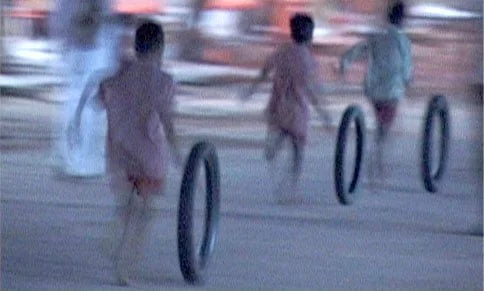
Flaschen und Götter
She knows nothing of his death – he knows nothing of her birth. Mexico and India – and the old dream of a one-way ticket.
In a cinematic essay, two contrasting stories come full circle to form a tale of life, death and birth – a love story.

Bouteilles et Dieux
Elle ne sait rien de la mort de son ex – il ne sait rien de la naissance de son ex. Mexique et Inde – et le vieux rêve du voyage sans retour.
Dans ce film aux allures d’essai, deux histoires opposées se fondent dans le cycle de la vie, de la mort et de la naissance – pour faire une histoire d’amour.
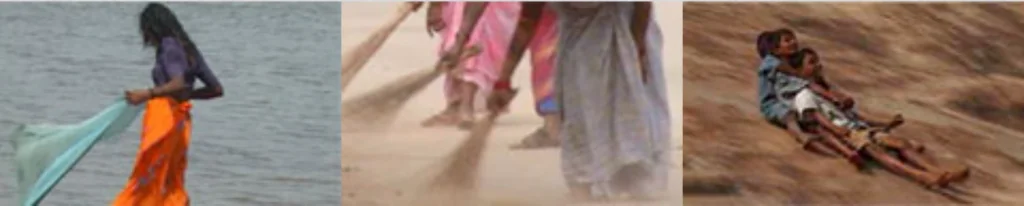
Bottles and Gods
She knows nothing about his dying – he knows nothing about her giving birth. Mexico and India – and the old dream of a one-way ticket.
In this film essay two diametrically opposed stories about the cycle of life, death and birth fuse into one love story.

Botellas y Dioses
Ella no sabe nada de la muerte de su ex-novia – él no sabe sobre el embarazo de su ex-novia. México y India – y el sueño del boleto sin regreso.
En este ensayo filmico, dos historias opuestas se encuentran en el ciclo de la vida. El parto y la muerte se funden para contar una historia de amor.
A visually powerful parable about the unity of opposites
One could call it a Taoist film poem: Felix Tissi’s work ‘Bottles and Gods’ tells a story about man and woman, birth and death, light and shadow, or yin and yang, in which the contrasts between the poles become increasingly blurred. He found the expressive images for his parable in India and Mexico, the dropout paradises of the Western world. The two invisible protagonists (voices: Delia Mayer and Frank Demenga) of the story, told in voice-over, are also dropouts. The nameless man is drawn to Mexico, his girlfriend Judith to India. The two have separated. They are fleeing their shared past, caught in the expectation of a clearly defined yet uncertain future. The man is terminally ill and knows that he will soon die. But it is not to be a miserable decline, but a conscious experience ‘in a good light’.
In reziprokem Sinne ähnliche Klischees begleiten auch Judith auf ihrer Reise. Sie, die nicht ahnt, wie es um ihren Freund bestellt ist, hat ihm verschwiegen, dass sie schwanger ist. Fern von den Blicken der Bekannten, vor allem aber weit weg von einer möglichen Versöhnung mit ihm, will sie ihr Kind zur Welt bringen. So rein und stark wie die Jungfrau Maria. Den verlassenen Geliebten, den sie zu Hause wähnt, liess sie im Glauben, sie fahre nach Dänemark.

Einen Essay nennt Felix Tissi seinen Film, den er weitgehend im Alleingang hergestellt hat. (Er zeichnet für Regie, Kamera, Schnitt und Text.) Mit einer kleinen Videokamera reiste er durch die beiden Länder, um auf möglichst unaufdringliche Art seine Bilder einzufangen, die er später am Schneidetisch mit den parallel entstandenen Texten zur Geschichte komponierte. Die mexikanischen Szenen sind tatsächlich durchweht von jener Hemingwayschen Verstocktheit, die dem Betrunkenen eigentümliche Würde verleiht und im deutlichen Gegensatz steht zu den Bildern voller Wärme vom indischen Subkontinent.
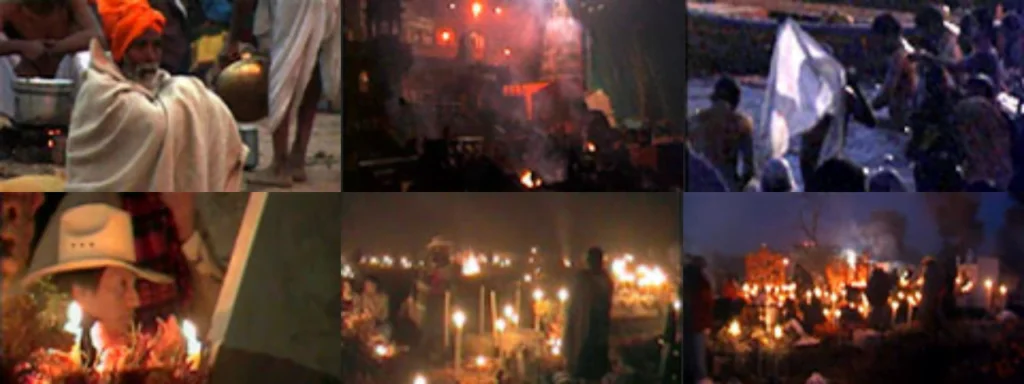
Die dokumentarisch stilisierte und doch immer fiktive Geschichte wird mit suggestiven Bildern und Tönen zu einem rhythmischen Filmgedicht verwoben. Die häufig verwischten und durch Einzelaufnahmen oder Zeitlupe verlangsamten An- und Einsichten sind streckenweise reinste Lyrik. Es entsteht ein Sog, der das Geschehen auf fesselnde Weise seinem – überraschenden – Ende zutreibt.
„Flaschen und Götter“ enthält streckenweise Material aus Tissis 1999 entstandenem preisgekröntem Film „Viva la muerte – es lebe der Tod“, der ausschliesslich einen männlichen Standpunkt reflektiert. Durch die Ergänzung mit einem weiblichen Part gelingt dem Autor nicht nur eine Erweiterung seines Themas, sondern tatsächlich eine völlig neue Vision: Nicht der einsame Steppenwolf steht jetzt im Zentrum der Überlegungen, sondern Gemeinsamkeit und letztlich die Liebe. Nina Scheu, Neue Zürcher Zeitung
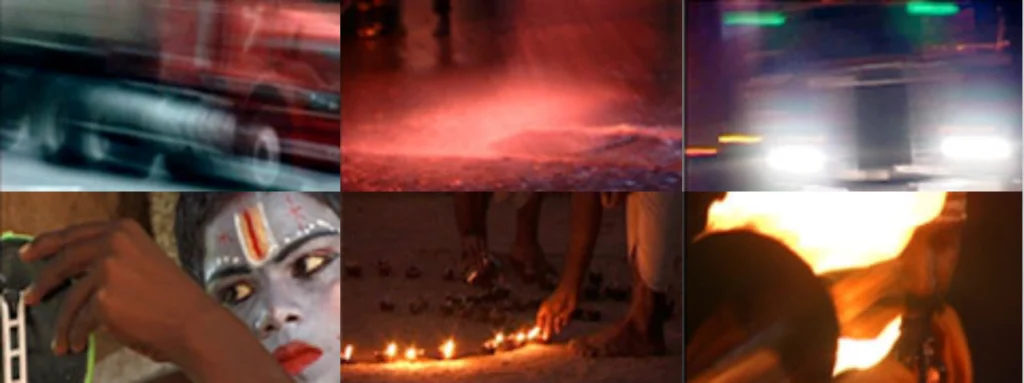
The credits for ‘Matrix Reloaded’ list 1947 employees, but there is another way: a film by Vincent Gallo, produced, written, directed and edited by Vincent Gallo, was shown in Cannes. And tomorrow there will be a film by Felix Tissi on television. The Bernese director made it practically single-handedly. He travelled through Mexico and India for almost a year, equipped with a small digital camera available in stores. And for almost a year, he condensed the images he brought back into an essay. ‘Flaschen und Götter’ (Bottles and Gods) tells, without any actors, the story of a man who travels to Mexico to die. And the story of a woman who travels to India to give birth. At first, the narrative strands run parallel, but then things get exciting, intertwine – and in the end, the woman is in Mexico and the man is in Denmark. But the most important journey has been made by the viewer, in their mind, carried away by a captivating composition of images and words. Matthias Lerf, SonntagsZeitung


